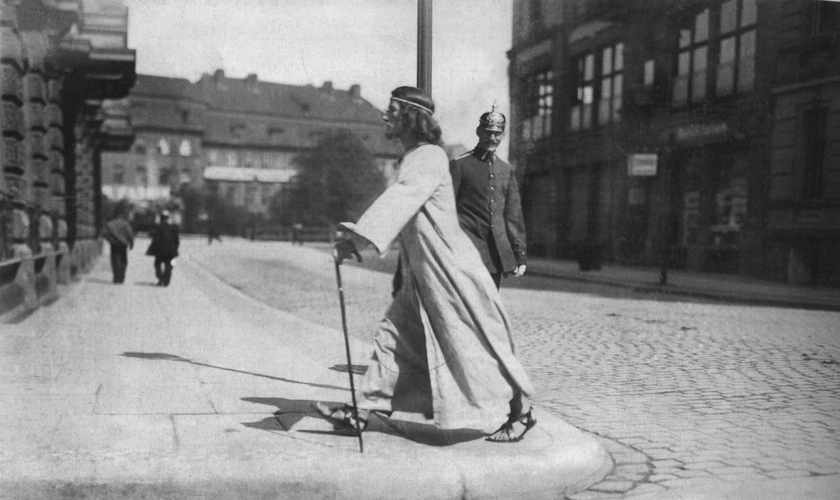
Merry May!
May 2, 2008 on 12:17 pm | In Spirituality, Personal | 2 Comments(Thanks to http://www.mythicjourneys.org/newsletter_apr07_sutton.html)
Yesterday was May Day – Beltane for us Pagans – by far the most joyous of our seasonal celebrations. For me it was especially welcome, because so far 2008 has been the year of the tarot card ‘the Tower.”

(Thanks to http://www.acumind.com/Joe/tarot/tower.gif)
It started before dawn as I groggily got up with long time friends Don and Anna, to drive the winding roads up to Tilden Park’s Inspiration Point, where Berkeley Morris has danced up the sun for at least 20 years.

(Thanks to Berkeley Morris (www.berkeley-morris.org)
It was a perfect May morning as the light slowly grew and thin clouds in the east caught the sun’s growing radiance. The dancers became more and more visible until the first rays of light appeared over a shoulder of Mt. Diablo. They then stopped and we all sang in the morning, followed by more dancing.
I had not been able to join in watching the Berkeley Morris celebration for seven years as my teaching responsibilities had taken me far away. It was a wonderful symbolic homecoming to the area where the Gods first made Themselves known to me.
Many of us then drove to a home in Piedmont and enjoyed a sumptuous breakfast catered by a talented Pagan cook. (I’d give him a plug but don’t know him.)
That evening I joined other Gardnerians for a private Beltane Sabbat in Berkeley. It was wonderful knowing so many of us across the world were doing the same. With the arrival of summer, of flowers and fruit and abundant life, the eternal promise that no darkness is eternal, no loss is permanent is given a symbolic reminder for us all.
If you want to know more about the deeper meaning of Beltane, go here and here and there is even a nice diary on Daily Kos, here. (Or read my Pagans and Christians!)
Sonoma Spring
April 30, 2008 on 1:05 pm | In Spirituality, Environment, Photography | No CommentsCalifornia is justly famous for its Spring wildflowers. Here in Sonoma County, the hike from Shell Beach to Red Hill is one of my favorites. It isn’t long, and the views are wonderful. In the Spring the flowers are the best I personally have seen on the coast, and they get better the higher you go. Ambitious hikers can start at Shell Beach and make a loop to the top of Red Hill, then down to Pomo Canyon and back by a lower route. It is wonderful as well.
Here is a photo of a field of wildflowers near the top of Red Hill. (More photos are at my smugmug site. Not everything is identifed yet, but it will be.). This post inaugurates my venture into supplying my own photographs and enables me to venture into exploring the beauties of nature in ways I have not been able to on this blog. Given the sorry state of our country, it is nice to be able to see something pure and peaceful for a change. It is better to experience it, and of late I’ve needed an especially big immersion. The energies of the natural world are a source of spiritual, emotional, and physical renewal as well as reminding me a context exists far greater than the battles of egos and fears that so dominate our human world.
To learn how better to experience the energies of nature, go here.
Ethics and the Death Penalty
April 29, 2008 on 11:25 am | In Current Affairs, Social and Political Theory | 1 CommentThe following was on Atrios today.
A Dallas man who spent more than 27 years in prison for a murder he didn’t commit was freed Tuesday, after being incarcerated longer than any other wrongfully convicted U.S. inmate cleared by DNA testing.
Full story here.
Atrios as usual makes good points. I want to make another. Without DNA testing this man would have remained in prison for a crime he did not commit. Many serious crimes, including capital ones, do not have DNA as evidence. For example, a drive-by shooting. Consider the following:
1. We KNOW that innocent people have been convicted of capital crimes and later exonerated by DNA evidence.
2. It would be very strange if the only innocent people convicted had involved crimes with DNA as evidence.
3. Therefore, it is almost certain that innocent people have been convicted in crimes where no DNA was left behind. In capital crimes, innocent people have then been executed.
In the moral cesspool that constitutes modern ‘conservatism’ not only is the death penalty firmly endorsed, attempts are continually made to reduce the time taken by appeals. In the language dictators and despots have always used, this would make executions more ‘efficient.’ Consider the following from the original story:
Like nearly all the exonorees, Woodard has maintained his innocence throughout his time in prison. But after filing six writs with an appeals court, plus two requests for DNA testing, his pleas of innocence became so repetitive and routine that “the courthouse doors were eventually closed to him and he was labeled a writ abuser,” Roetzel said.
Modern ‘conservatives’ therefore either ignorantly advocate killing people many of whom we can be sure are innocent, while letting guilty ones walk, OR they knowingly advocate killing innocent people, which is worse. In the latter case they themselves are morally guilty of advocating murder.
They are full of arguments about why government cannot be trusted to do all sorts of things. But these arguments fall silent when government is called upon to kill or incarcerate people.
There is something ethically lacking with these people.
Increasingly I want to throw up whenever I hear a ‘conservative’ talk about morality. There are exceptions, but not many.
The Crisis in Our Ruling Elite
April 17, 2008 on 1:12 pm | In Current Affairs, Social and Political Theory | 2 CommentsThe Bush years have increasingly worried me that our political system has entered into terminal old age, where members of a self-perpetuating ruling elite become fixated on their perks and privileges while utterly losing touch with the rest of the country. There is plenty of evidence this is the case, and historically when this happens elsewhere the result is national decline.
Last night’s debate between Obama and Clinton, organized by ABC, is further evidence of a nation increasingly brain dead at the top. There has been considerable discussion of how poor and corrupt George Stephanopoulus and Charlie Gibson were in their “moderation” of the debate, and the points made against them are completely valid so far as I can tell. Their performance is yet another example of why mainstream media should never be owned by corporations. For more on this subject, see here, here, and here.
Corporations and the Media
April 5, 2008 on 6:01 pm | In Current Affairs, Social and Political Theory | No CommentsCourtesy of Glenn Greenwald at Salon, we find that the corporate media has reported on the major issues facing Americans with the following emphasis:
In the past two weeks, the following events transpired. A Department of Justice memo, authored by John Yoo, was released which authorized torture and presidential lawbreaking. It was revealed that the Bush administration declared the Fourth Amendment of the Bill of Rights to be inapplicable to “domestic military operations” within the U.S. The U.S. Attorney General appears to have fabricated a key event leading to the 9/11 attacks and made patently false statements about surveillance laws and related lawsuits. Barack Obama went bowling in Pennsylvania and had a low score.
Here are the number of times, according to NEXIS, that various topics have been mentioned in the media over the past thirty days:
“Yoo and torture” - 102
“Mukasey and 9/11″ — 73
“Yoo and Fourth Amendment” — 16
“Obama and bowling” — 1,043
“Obama and Wright” — More than 3,000 (too many to be counted)
“Obama and patriotism” - 1,607
“Clinton and Lewinsky” — 1,079
If there were not already ample reasons why corporations should be banned forever from owning media outlets in a free society, this record of treason against the American public should be sufficient for even the most doctrinaire free market advocate.
A corporation is incapable of human values or awareness. It only seeks money. When the media is highly concentrated, as it is, the problem becomes even worse because the companies that own the news outlets also own many other potentially profitable vehntures and subordinate the news to those interests as well.
Heretical Thoughts About Taxes
March 21, 2008 on 11:17 am | In Current Affairs, Social and Political Theory | 5 CommentsI will appreciate it if anyone has thoughtful criticisms of the following. Ideologues unconcerned with actual events need not waste their (and my) time.
We have seen that Wall Street has both helped itself to enormously disproportionate incomes due to their capacity to game the system and that they have made themselves so essential to us that we are taxed to bail them out. This is hardly the first time. Under Ronald Reagan the Savings and Loan industry was bailed out for incompetently losing billions.
As then so now, the middle class and poor are paying so the ultra rich can game the system to socialize the risks they take while privatizing the gains. The Bush family is an excellent example, Neil Bush being as incompetent a businessman as his presidential brother, losing billions, and being bailed out so he can continue living in unarned luxury.
There has never been a stronger argument for a highly graduated income tax. I think a person can get by in comfort on a disposable annual income of, say, $1 million. Does anyone really need more? There should be generous allowances for charitable giving because individuals can often do better than the government – and such allowances enable them to help others they otherwise might not. But for the take-it-all-home types, nail them.
Libertarians and conservatives will scream this is unfair – taking away people’s rewards for taking risks and succeeding.
In a perfect world where the rich do not consistently game the system in their favor their point could still be contested for reasons too complex for a blog discussion, but it would be stronger than it is. In the world we actually have their argument is naïve at best, willfully blind at worst.
I will focus on reasons rooted in the world we actually have
First – simple justice. The corporate and financial rich in particular have gamed the legal and economic system for a long time, using the power of government to take from others for their personal benefit. In self-defense we need to reduce their incentives to rob us. If they can keep less wealth they have fewer incentives to use the government to give them more.
Second – the bankers and their kind tell us their industries are too important to the economy to fail. They demand special privileges as a result. If they are too important, and so need the privileges, those running them should not be allowed to use their positions to enrich themselves disproportionately. The price of being protected is not being able to take advantage of your privileged position.
Alternatively, we should break up any and all such businesses because a free society cannot allow any business to become that important.
I have real sympathy for the most creative entrepreneurs and creative geniuses. They should be able to make a very good living. But for them money is not the only pay off, unlike many of those in the financial industry. But even after the New Deal, when our tax system was at its most progressive, there was no shortage of wealthy people in the country. But we were not in the predicament we are in now that the so-called free market people have been in charge for several decades.
My point is NOT to equalize everyone. But it is to reduce the incentives of the most financially successful to create dynasties of privilege over everyone else by reducing both their means to game the system and their payoffs for doing so. Maybe a very steep income tax at the highest income levels is not the way to go. There might be better ways. But if we want to remain a free society we need to defend ourselves against the ruthless oligarchs who have come ever more brazenly to dominate our country.
Columbia, Ecuador, Venezuela and the Democratic Peace
March 9, 2008 on 12:36 pm | In Current Affairs, Social and Political Theory | No CommentsOne of the most important developments in the modern world is the rise of democracies to becoming the dominant part of the world’s population, and economic and military power. The chief reason this unprecedented development is important is that only liberal democracies never fight wars with one another. The recent peaceful settlement of the crisis on the borders of Ecuador, Columbia, and Venezuela is a powerful illustration of this fact.
The pioneering work of Rudy Rummel powerfully demonstrates that the democratic peace is significant statistically, and both he and I (scroll to here and down to democratic peace article) have explained the reasons for this continued peace: that democracies are emergent orders and not hierarchical organizations, as are undemocratic states. Different dynamics apply to their behavior as systems, dynamics that tend to keep the peace when both parties are democratic.
For the first time in human history a solution to war might have evolved, and done so unintentionally. It does not guarantee peace. There are too many sociopaths in power and serving the role of neoconservative advisors to ever be 100% certain. But it is very unlikely.
The largest threat to that solution – the threat of the US Presidency evolving into a Caesarist dictator elected every four years - now seems destined to failure. A powerful executive independent of domestic democratic pressures is no more likely to keep the peace than any other kind of dictator or king, as Kaiser Wilhelm demonstrated so tragically in WWI. He is too insulated from what it is that promotes peace which are the dynamics of a democratic system far more than the character of the individuals who hold power.
This is the one area where Prof. Rummel and I parted ways. He supported our imperial venture against Iraq because he believed the Bush administration intended to build a democracy there and that once Hussein was gone it would be possible to construct one. I opposed it because I believe democracies have to build on internally generated institutions currently lacking in Iraq and because the centralizing of American political power would weaken the reasons for the democratic peace by moving us towards a government like Wilhelmine Germany: a dictator abroad with democracy locally.
I believe events have demonstrated who was correct here. There are things we and other democracies can do to promote more democracies, but imposing them violently on cultures with no previous experience of basic free institutions is not one of them.
Obama’s 2002 Speech Against War on Iraq.
March 7, 2008 on 2:49 pm | In Current Affairs | No CommentsThis is Barack Obama’s speech against going to war in Iraq. He spoke when others such as myself also opposed the war and took constant flak from right wingers and their Democratic enablers.
At the same time some, like Hillary Clinton, actively facilitated it and hundreds of thousands of deaths later, still refuse to admit an error. She even has the temerity to attack Obama on issues of judgment and experience. I urge anyone reading my blog to read Obama’s speech here and ask yourself who has the best demonstrated judgment. It is not long.
With thanks to Americacblog for originally posting it.
I will still vote for her if she is the candidate. But I will feel queasy doing so.
October 2, 2002
Good afternoon. Let me begin by saying that although this has been billed as an anti-war rally, I stand before you as someone who is not opposed to war in all circumstances. The Civil War was one of the bloodiest in history, and yet it was only through the crucible of the sword, the sacrifice of multitudes, that we could begin to perfect this union, and drive the scourge of slavery from our soil. I don’t oppose all wars.
Continue reading Obama’s 2002 Speech Against War on Iraq….
CALL FOR PAPERS
February 29, 2008 on 1:12 pm | In Social and Political Theory, Environment | No CommentsThe Fund for the Study of Spontaneous Orders at the Atlas Economic Research Foundation is seeking papers exploring the theme
“ORDERS AND BORDERS”
for its Second Conference on Emergent Order and Society
Selected papers will be presented at a conference to be held in Portsmouth, NH, November 1-4, 2008. After author revisions/responses, the papers will be published in our new, open source online journal, Studies in Emergent Order. The site is presently under construction.
We urge all scholars interested in exploring how emergent order analysis can contribute to our understanding of the social world to consider submitting a proposal. We seek original work in four basic areas:
1. Exploring the relations between emergent (spontaneous) orders and the instrumental organizations within them. For example, the relationship of corporations to the market, political parties to democracies, or schools of thought to science. To what degree are they benign, mutually beneficial, or conflicting?
2. Exploring issues involving the intersection and overlapping of different emergent order processes. For example, how do science and the market influence one another? How do science and democracy influence one another? To what extent can these influences be regarded as beneficial, neutral, or disruptive?
3. Exploring organizations that straddle the borders of different emergent orders. For example, the mass media must be both economically viable by serving consumers and also able to inform citizens in a democracy. A fishery must be economically viable and maintain its ecological sustainability. Different emergent processes are coordinated by different rules biased towards different values. How do they interact?
4. Exploring issues involving the borders of disciplines studying emergent phenomena. The distinction between emergent orders and instrumental organizations arose independently of disciplinary boundaries and a theoretical approach making use of it cuts across traditional disciplinary boundaries. Thus much work in economics, anthropology, ecology, philosophy and sociology of science, and political science independently discovers and explores similar territory without benefiting from similar work elsewhere. How might we develop a paradigm of study that integrates these boundaries?
Acceptable papers may be either case studies or more general theoretical explorations.
We invite those unfamiliar with the first conference to examine papers prepared for that gathering. You can view them at http://emergentorders.pbwiki.com
The password for access to the wiki site is: halcyon07
A description of the work of the Fund may be found on the Atlas website under the listing “Academic Programs” at http://atlasusa.org
Submission Guidelines and Procedures
Paper proposals should be submitted by April 30, 2008. The proposal should describe the anticipated argument and how it relates to at least one of the conference themes. Proposals should be no more than two pages double spaced, not including an optional bibliography of works the author anticipates discussing. Submit to William.Dennis@atlasusa.org
The Fund will select a maximum of 12 papers for inclusion in its conference, and will notify their authors by May 30, 2008. Final papers must be submitted to the Fund by September 1, 2008 in order to ensure conference participants adequate time to read them in advance. The Fund will pay those authors whose work is accepted a total of $2,000 for their paper, initial publication rights, and for their full participation in the conference, (plus room and board at the conference, and travel expenses, up to the equivalent of a roundtrip coach airfare from their location to the conference site). The Fund’s decision on the papers selected for the conference is final. Other support may be forth-coming for some of the other papers submitted, but no such support is guaranteed.
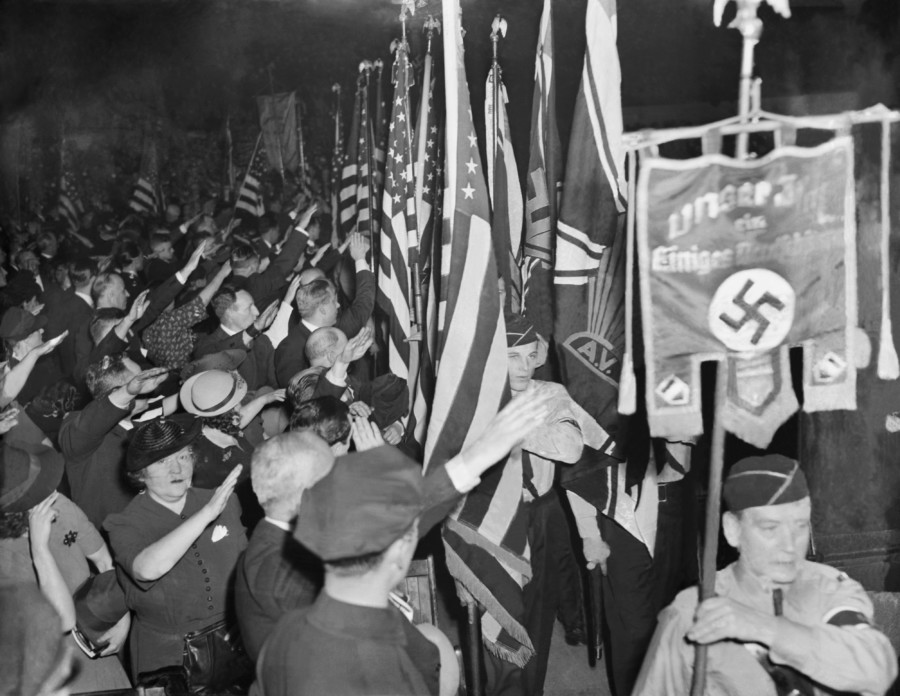
Deep Ecology, Paganism, and Fascism Revisited
February 27, 2008 on 6:49 pm | In Spirituality, Social and Political Theory, Environment | 3 CommentsSome time ago The Pomegranate, a Pagan academic journal, printed an attack on Paganism and deep ecology by Bookchinite Peter Staudenmaier: “Fascist Ecology: The ‘Green Wing” of the Nazi party and its Historical Antecedents.” Staudenmaier’s article appeared in issue No. 15, Feb. 2001 (4-21), when it was a hard copy journal. My response was in issue No. 16, May, 2001. (51-3). If I remember correctly, his response appeared in its first disc version, as did my final reply.
Much has happened since then, but the irritating old canard about deep ecology and the Nazis raised its head from time to time in publications from the left, like the Bookchinites, and also the right, such as Anna Bramwell’s in many ways very interesting as well as deeply flawed Ecology in the 20th Century. It also became in a milder way a point of contention in my debate some years back with Ken Wilber. For my response see “Ken Wilber’s Critique of Deep Ecology and Nature Religion” after you go here and scroll down. Happily, Ken has since substantially changed his views about us. Our last encounter was a very friendly one, though my views of an integral understanding of the world remain different from his.
The recent post by ‘ablue’ and MDM’s very nice support response have convinced me to offer up my comments again on this kind of argument.
Sadly I cannot provide Staudenmaier’s pieces but I think my responses discuss the bsic issues and I am sure if I make an error, folks like ‘ablue’ will be quick to correct me! Continue reading Deep Ecology, Paganism, and Fascism Revisited…
Powered by WordPress with Pool theme design by Borja Fernandez.
Entries and comments feeds.
Valid XHTML and CSS. ^Top^